
The Supervision Tax
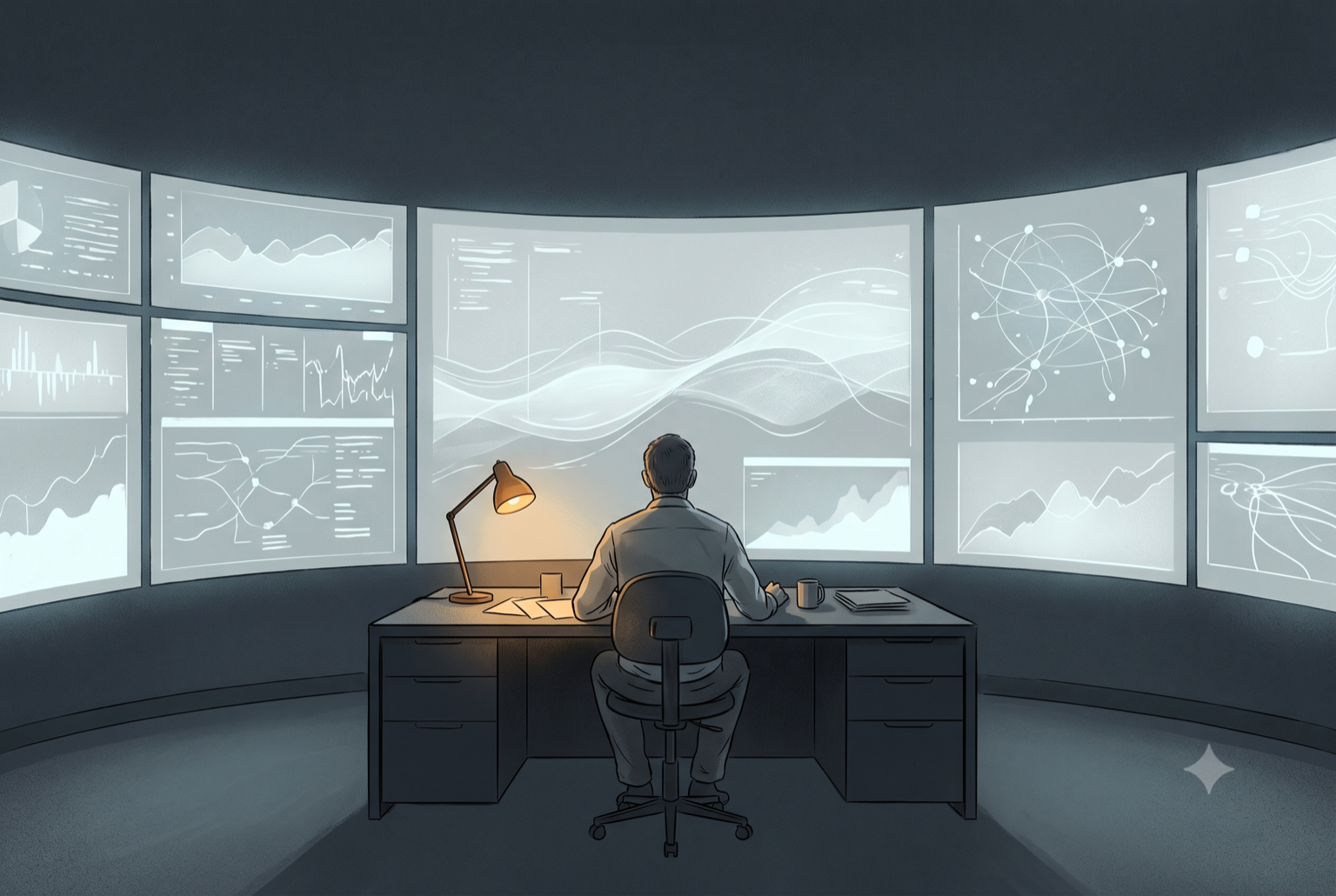
We wanted machines to do the work so we could think.
Now the machines think, and we do the work of watching them.
We built tools to save time. We have never once kept the time.
This is not a complaint about AI. AI is genuinely good, and it is getting better quickly. It is a question about where the saved time goes, because it has never once come to us. Every generation of tools promised to hand us our hours back. Every generation quietly found something else for those hours to do.
We have run this experiment before
Start with the washing machine.
Before it, laundry was a full day of heavy physical work, and often more than one person’s day. The machine did precisely what it promised. It removed the labour.
The hours did not come back.
The historian Ruth Schwartz Cowan traced what happened instead in More Work for Mother. As each appliance arrived, the standard rose to meet it. Clothes that were washed once a week began to be washed after a single wearing. Work that had been spread across family members, older children and hired help quietly consolidated into one person’s job, because one person and a machine could now theoretically manage it. A century of household technology arrived, and the time spent on housework stayed roughly where it had been.
The tools worked. The expectations moved.
Email did the same thing to correspondence. Sending a message went from days to seconds, which is a genuine and enormous gain. We did not respond by writing the same number of letters in less time. We responded by writing vastly more messages. Microsoft’s own telemetry now describes a workday in which people are interrupted every two minutes, and the average employee handles well over a hundred emails and a hundred and fifty chat messages a day. Nobody chose that. It accumulated.
Then there is the largest version of the prediction. In 1930, Keynes told an audience that within a hundred years his grandchildren would work about fifteen hours a week. Output per hour has risen roughly eightfold since he said it. We are working something closer to forty.
Each time, the tool did its job. Each time, the time went somewhere other than to us.
This time the something else is supervision. The strange part is what it displaced.
We automated the boring parts and kept the ones that burn you out
The boring work was not only waste. It was also rest.
Writing boilerplate. Renaming things. Formatting a document. Filling in the obvious half of a template. The mechanical second pass over a file you already understood. Those tasks asked almost nothing of us. Our hands moved and our minds idled, and we came out the other side ready to think again.
They were small rests, hidden inside the working day, and nobody ever called them that. On a status report they looked like inefficiency. So they were automated first, because they were the easiest to automate and the easiest to justify.
What is left is judgment, decision and care. All day. Back to back. Nothing in between.
That is not a lighter day. It is a denser one.
The calendar still shows eight hours. The person living inside those hours is doing something quite different than they were three years ago. Same duration, no filler, no recovery, every minute asking for a call that matters.
Ask someone when they last had a task they could do without thinking. Notice how long they take to answer.
What replaced the thinking
Here is what I did not expect.
I assumed that removing the mechanical work would leave more room for thinking. Deep thinking. The kind where you hold a problem in your head for an hour and come out the other side with something you did not have before.
That is not what filled the space.
What filled it was deciding. The day became a sequence of small verdicts. Accept this, reject that, keep this suggestion, discard that one. Each is minor. There are hundreds of them. They arrive faster than the reflection that would justify them.
Then reviewing. Reading things nobody wrote. Understanding output well enough to be responsible for it, without the understanding that comes from having made it.
Then arguing. With the machine, when it is confidently wrong. With each other, about whether what it produced is good enough, or correct, or actually ours. Conversations that used to be about what to build are now partly about what to accept.
Deciding, reviewing, arguing. That is a different job than thinking, and a heavier one, because thinking has a rhythm to it and adjudicating does not.
We did not get more time to think. We got more things to have an opinion about.
An afternoon
Here is the shape of it, in the small.
A design document that would once have taken a morning to write now takes twenty minutes to produce. That is a real gain, and worth having.
What follows is less visible. The document is plausible, structured and complete, and somewhere inside it sit three assumptions that nobody made on purpose. Finding them is not reading. It is reconstruction. You have to rebuild the reasoning that would have produced this document in order to test whether that reasoning holds, and there was no reasoning, so you build it yourself, backwards, from the conclusion.
Then it goes to four people, and each of them does a version of the same thing.
Two of them disagree about one section. The disagreement is not really about the section. It is about how much to trust the thing that produced it. That conversation takes forty minutes and does not resolve, because nobody in the room has a settled answer to it yet, and probably nobody does anywhere.
The morning that was saved is gone by mid afternoon. Nobody can point to where. Every individual step really was faster than it used to be.
Not a disaster. Not a scandal. A quiet transfer, from making things to adjudicating them, with the total roughly unchanged and the texture of the day noticeably different.
A migration

Here is the same shape, in the large.
A team needs to move forty services off a deprecated internal library. This used to be a quarter of work, most of it mechanical, and the mechanical part was precisely why people could get through it while thinking about something else.
An agent now does that part in an afternoon. Forty pull requests, all plausible, all compiling, all reasonable at a glance.
Then the actual work begins, and it is not the work anyone planned for. Each of those forty changes lands in a service with its own owner, its own deployment window, its own quiet set of things that are true in production and written down nowhere. Somebody has to hold all of that in their head and decide, service by service, whether a plausible change is a correct one. Not once. Forty times.
The generation collapsed from a quarter to an afternoon. The verification did not collapse at all. It grew, because the person verifying no longer has the understanding that used to arrive free with having written the thing.
That is the supervision tax in its clearest form. The part of the work that got cheap was never the expensive part.
None of this is new
Here is the part I keep coming back to.
In 1983, Lisanne Bainbridge published a paper called Ironies of Automation. Her argument, compressed:
When you automate a process, you automate the parts that are easy to automate. What is left for the human is everything that was too hard, plus the exhausting job of watching. And because the human no longer practises the skills, those skills fade. So at the rare moment when intervention is genuinely needed, the person is least equipped to provide it.
She was writing about power plants and aircraft. It reads like it was written about AI agents last week.
The paper has been cited more than 1,800 times. In 2017, IEEE published a follow up titled “Ironies of Automation: Still Unresolved After All These Years."
Forty three years. The trap was written down, studied, and given a name, and it was built again at a scale the original author could not have imagined.
History does not repeat exactly. It just keeps offering the same deal.
Where the time goes next
We wanted machines to do the work so we could think.
We got the machines. The thinking did not expand to fill the space. Deciding did. Reviewing did. Arguing did.
The boring parts that used to give us somewhere to rest are gone, and their removal was counted as a win.
We built tools to save time. We have never once kept the time.
The hour still exists. It shows up every single time. We have simply never been the ones to spend it.
References
- Ruth Schwartz Cowan, More Work for Mother: The Ironies of Household Technology from the Open Hearth to the Microwave (1983)
- Nicholas Crafts, The 15-Hour Week: Keynes’s Prediction Revisited, Economica (2022)
- Microsoft Work Trend Index, Breaking Down the Infinite Workday
- Lisanne Bainbridge, Ironies of Automation, Automatica (1983)
- Ironies of Automation: Still Unresolved After All These Years, IEEE (2017)
AI assisted blog content.